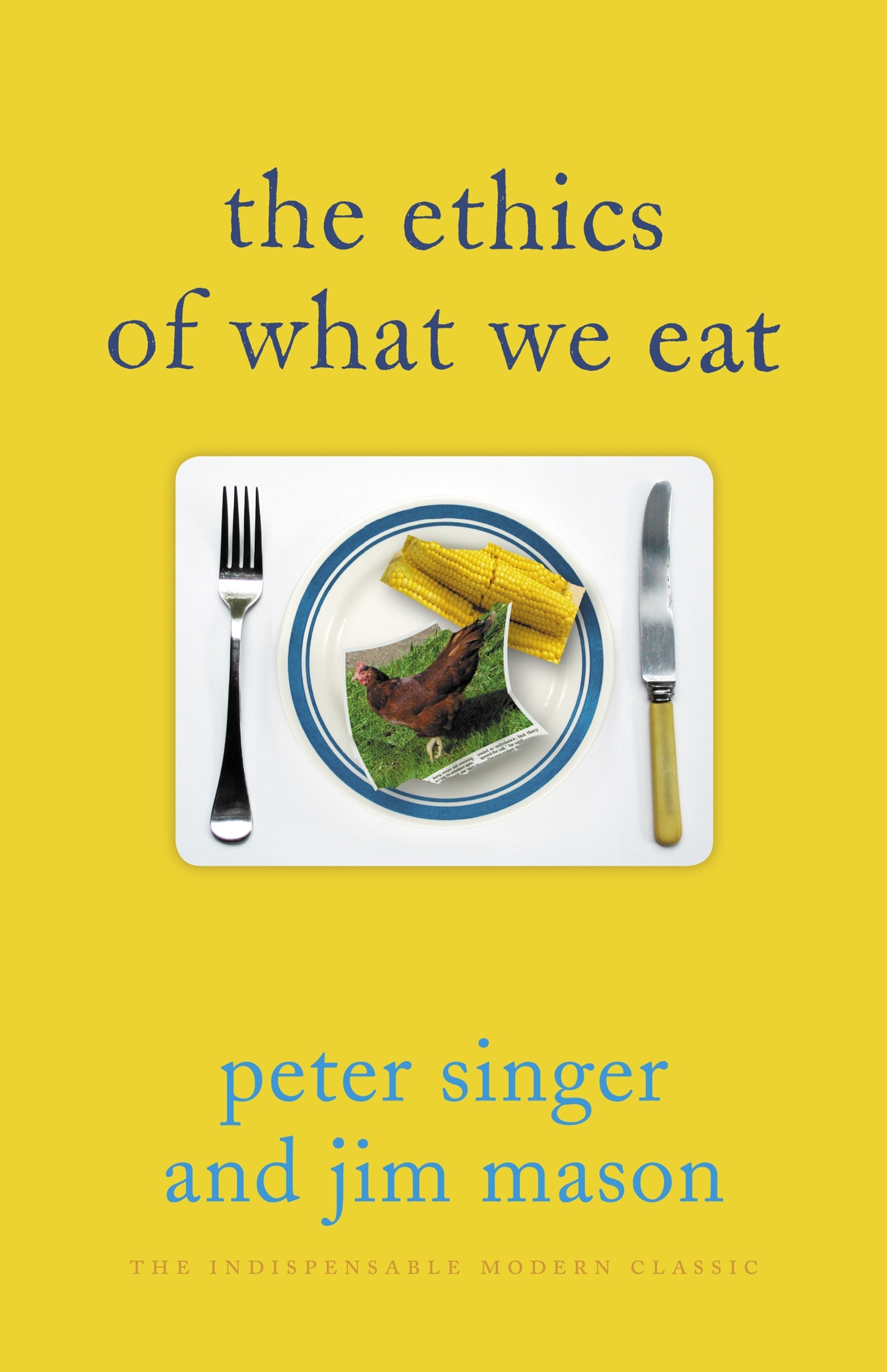
Meet three different families with three different lifestyles.
The Hillard-Nierstheimer family exemplifies the standard meat-and-potatoes diet: they shop at the local supermarket, occasionally eat fast food, and enjoy their meat, Coke and beer. The Masarech-Motavalli family is concerned about its health and generally buys fresh, locally grown vegetables. They call themselves ‘caring carnivores'—they’ll only eat meat from animals raised to humane standards. The Farb family is vegan: nothing they eat comes from an animal, and wherever possible they buy organic.
Peter Singer and Jim Mason take a standard meal enjoyed by each family and trace its ingredients back through the production process to see what ethical issues arise. From turkeys specially bred to have massive breasts so they can no longer stand up, to chickens dropped alive into boiling water; from revelations of child and forced labour on coffee plantations, to the lack of policing of the term ‘organic'—the authors raise questions about people’s everyday food choices and challenge us to think before we buy. After all, we must eat. On what should conscientious consumers dine? And what is all this stuff doing to our health?
What Singer and Mason discover about food choices and their links to human health, animal suffering and environmental degradation will shock and challenge you. Containing essential information on ethical but practical shopping and dining, The Ethics of What We Eat will forever change the way you look at food.
‘An absolutely indispensable book for anyone who thinks about what they eat. I cannot recommend it highly enough.’
Jeffrey Masson, author of When Elephants Weep and Raising the Peaceable Kingdom.
‘In this well-researched and deeply troubling book, Peter Singer and Jim Mason paint a devastating portrait of the American meat industry that is bound to change the way you eat.’
Michael Pollan, author of The Botany of Desire and The Omnivore's Dilemma
‘In their new book—commonsense in its approach, easy to read, packed with information—Peter Singer and Jim Mason show how market forces inexorably drive farmers toward cruel practices. But their overall message is not bleak. Factory farming is under pressure to justify itself. The day may not be far when we will return to a more ethical treatment of fellow animals, and there are many practical things that ordinary consumers can do to bring that day nearer.’
J. M. Coetzee, Nobel Prize-winning author of Disgrace and Slow Man
‘Singer and Mason will open your eyes, and provide solutions.’
Herald Sun
‘Vital, urgent and disturbing.’
New York Times
‘Absolutely gripping reading…It’s Michael Moore without the antics.’
Sydney Morning Herald