Free freight for all book orders

The power of human beings to affect one another in ways beyond reason and beyond merit has offended rationalists and moralists since the dawn of thought, but it is partly what yields to us that sense of human individuality which we express when we say that human beings are unique and irreplaceable. Such attachments, and the joy and the grief which they may cause, condition our sense of the preciousness of human beings. Love is the most important of them.

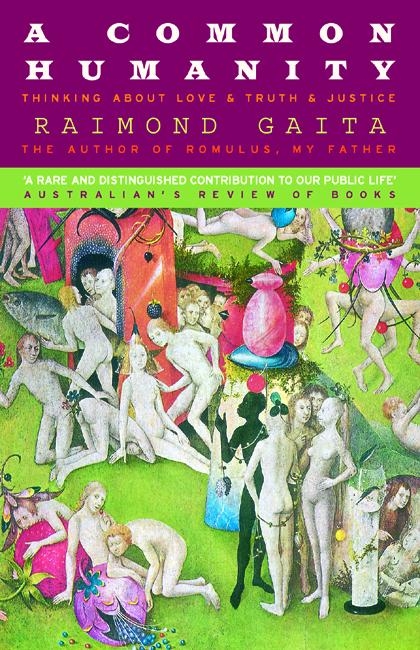
In this marvellous book, Raimond Gaita discusses ideas about love and hatred, good and evil, guilt and forgiveness. Moving, wise and inspiring, A Common Humanity explores personal, political and philosophical ideas about the kind of society and the sort of public conversation we might have in the twenty-first century.

Praise for A Common Humanity:

‘Raimond Gaita’s insights are original and his prose is as eloquent as it is affecting.’

The Economist, Books of the Year, 2000

‘Gaita is a philosophically serene philosopher. He writes calmly, no shouts or screams, no outrage. He always shows what he thinks is right in opposing view before saying gently what is wrong. Gaita is in search of conversation, not argument … He weaves his narrative with quotations that are as calm and serene as his own writing. It is an education reading him reading them.’

Greg Dening, Sydney Morning Herald

‘On every page of Gaita’s work – all his work – one hears a distinctive, unrelentingly serious and powerful voice. In Romulus its tone is lyrical and affecting, in Good and Evil philosophical and exacting. If the memoir displays a deep and subtle reflectiveness which hints at its author’s philosophical vocation, the unembarrassed ease with which the philosophical work deals with concepts such as love, remorse, shame and pity reminds us that this philosopher is also a writer. A Common Humanity is a work of both the writer and the philosopher. It is a rare and distinguished contribution to our public life.’

Martin Krygier, Australian's Review of Books

‘The trenchant beauty of the discussion, the courage and independence of the mind at work, are a magnificent accomplishment.’

Philosophical Books

‘This is a remarkable book. Its series of related essays pursue with eloquence and great insight some of the most difficult and important problems of moral thinking. The central thread linking the various discussions is Gaita’s passionate articulation of the moral importance of the uniqueness of human beings. Though it is an original contribution to moral philosophy, the book is utterly free from the technicalities of the profession: many books of philosophy say that they are accessible to the general reader, but in this case it is indisputably true. Though profound and in places difficult, the book demands of its reader only careful thought and an engagement with the moral seriousness out of which it was written. Gaita’s book is an absorbing read from beginning to end, its discussions are memorable and in many places moving. A quite exceptional work.’

Tim Crane, University College London

‘A book for anyone who is prepared to think seriously. It is also moving in a way that is rare in philosophy.’

Anthony Duff, University of Sterling
9781876485412_large_cover

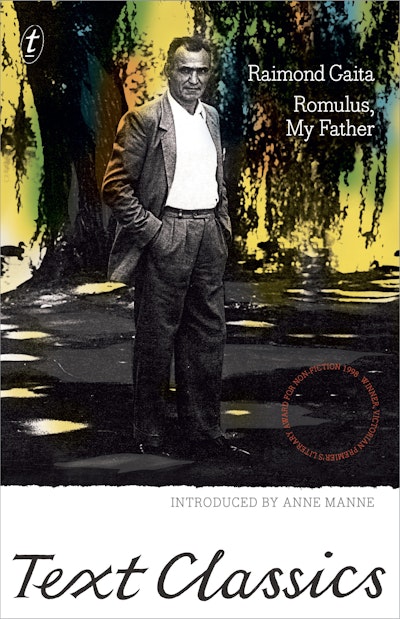
Raimond Gaita

Raimond_gaita_regular

Raimond Gaita was born in Germany in 1946. He is Emeritus Professor of moral philosophy at Kings College London and a Professorial fellow at the Melbourne Law School and the faculty of Arts of the University of Melbourne.

His books have been published in many… »


Webad_cat2012a
Webad_ebooks
Webad_textprize
Classics_tile